Construction of the Estérel Côte d’Azur Agglomeration Headquarters
A communal bastide, a landmark in the city.
The construction of the future headquarters of the Esterel Côte d’Azur Agglomération requires several essential parameters to be taken into account to ensure the success of the project.
Firstly, there is the image of the institution and the landmark function that public buildings assume in the city. Its visibility and identity therefore become priority issues. Secondly, there is the question of the visual impact on the neighborhood and the relationship to the context and urban fabric. The latter is discontinuous and varied, characterized by the presence of collective housing, juxtaposed housing developments, and sports facilities such as the Jean François Krakowski sports center and the rugby field, all set in a remarkable landscape at the foot of the Esterel mountains.
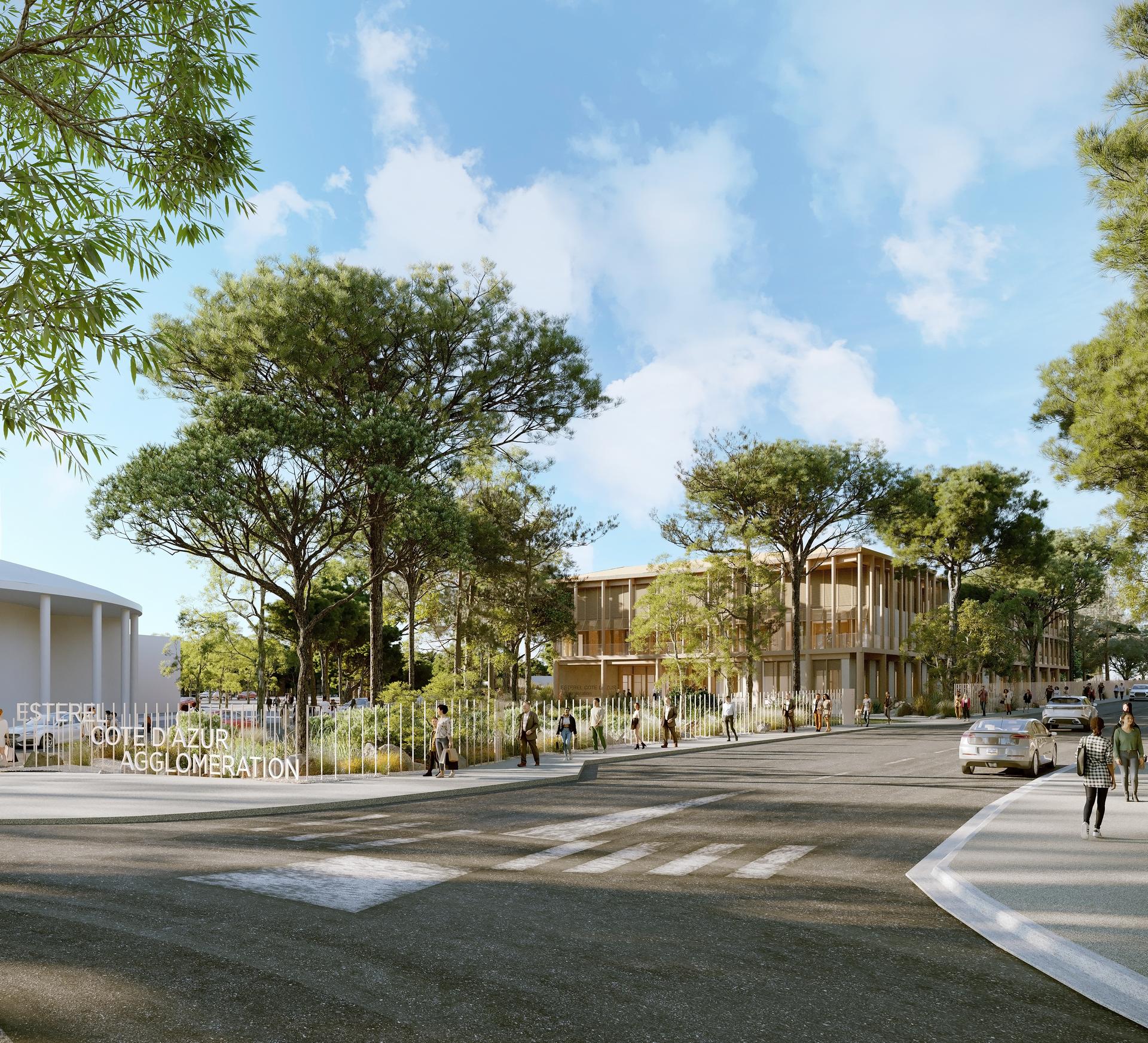
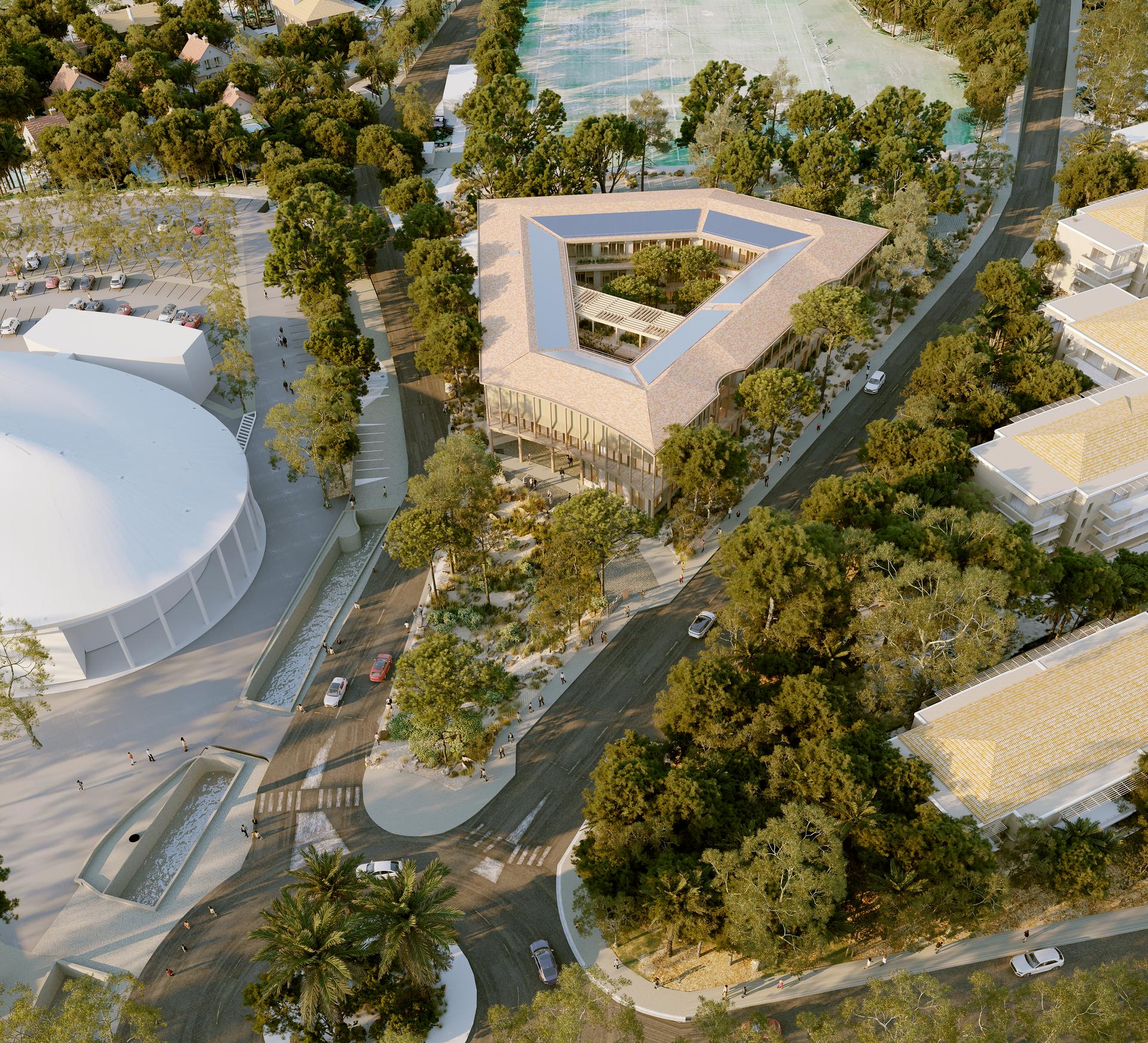
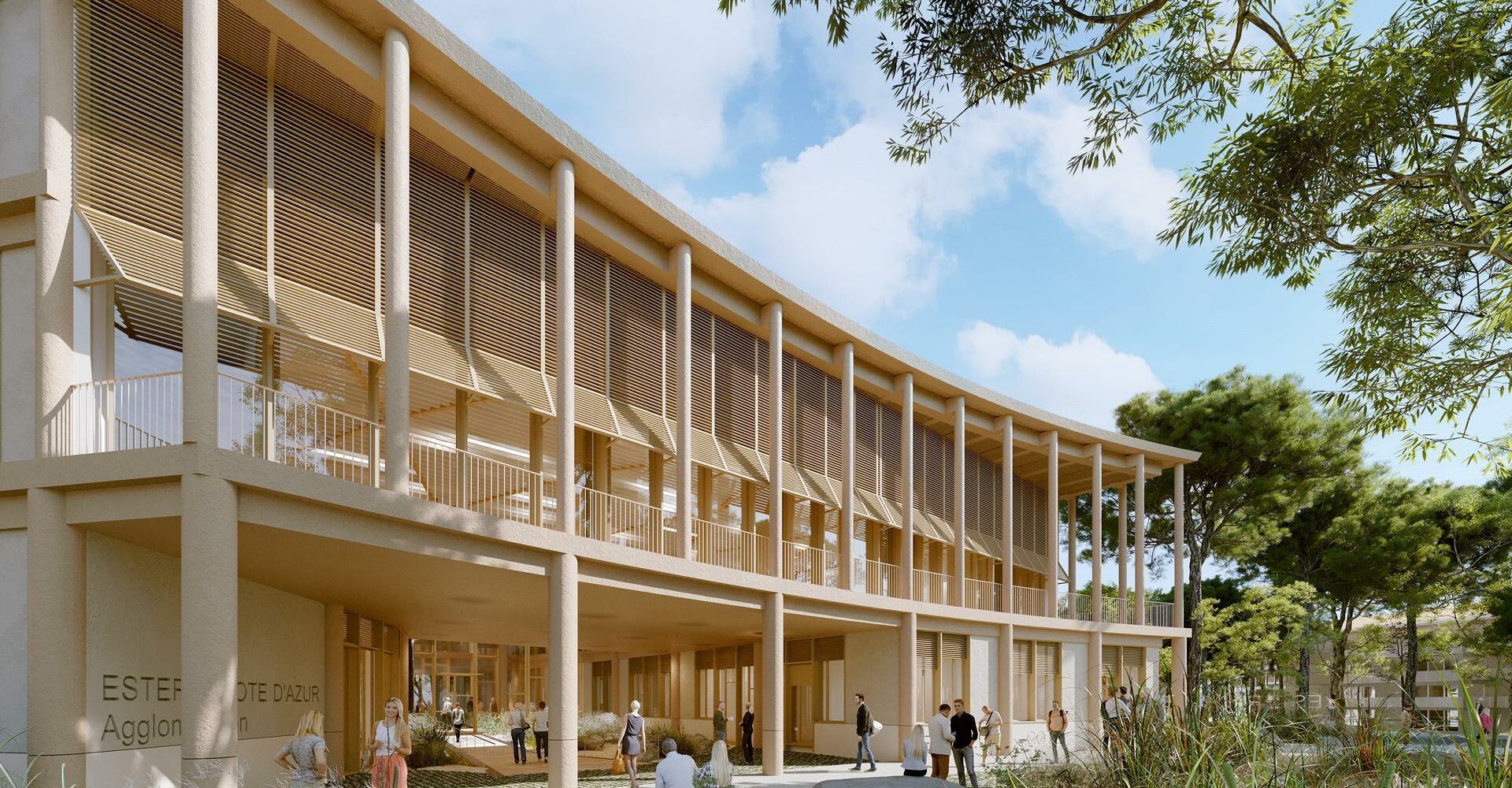
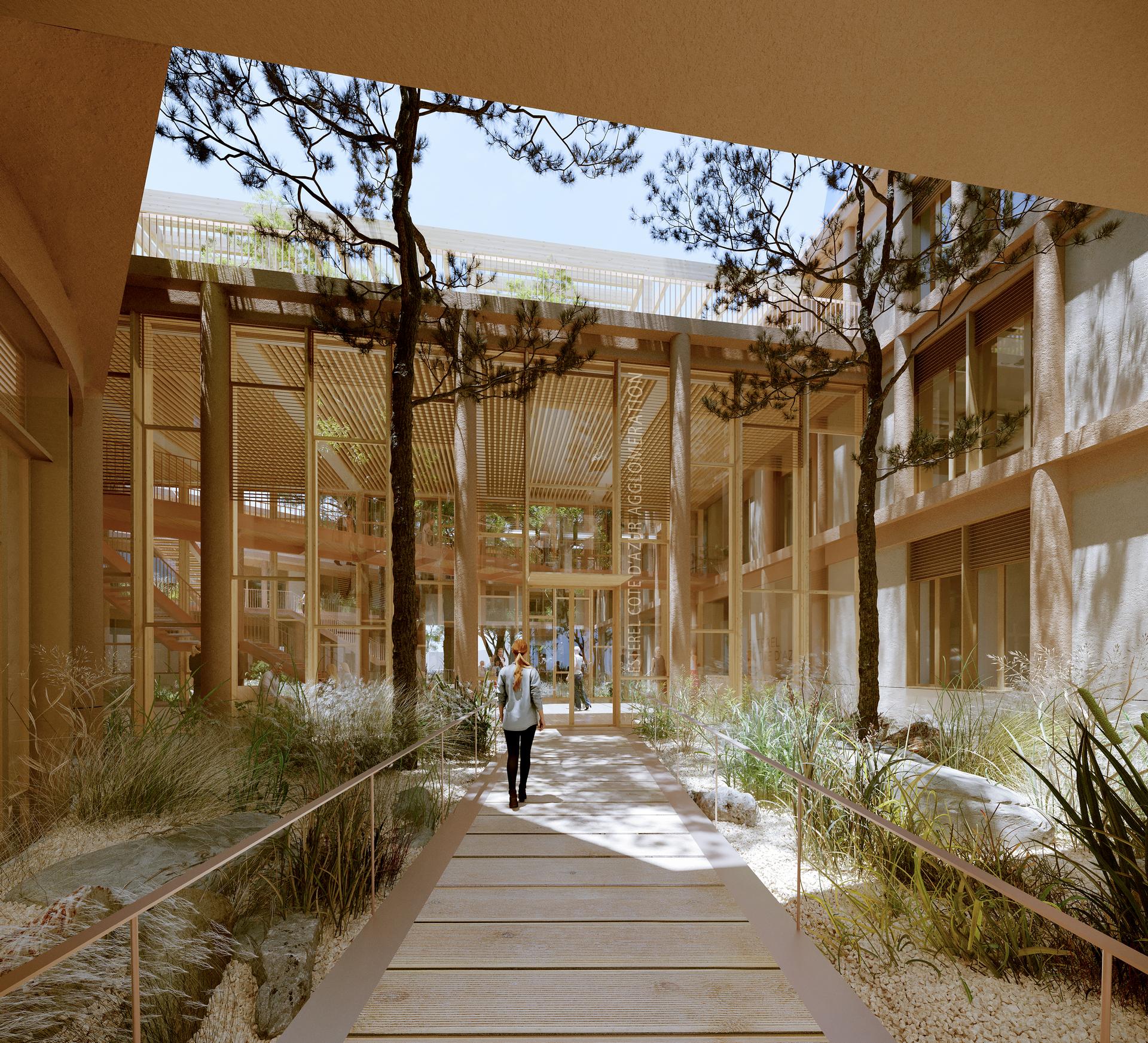
There are also the functional challenges specific to a contemporary building, which must offer high-quality, dynamic, flexible, easy-to-maintain, and sustainable workspaces. We propose to build a compact, unified building centered around a generous patio within a landscaped urban park. A sober urban landmark inspired by the Roman Domus, a communal bastide that combines the obvious image of an institution with the more domestic image of a Roman villa. Capable of displaying its identity without being ostentatious. It is a fusion of classical architecture, particularly visible in the treatment of the highly mineral facades and tiled roofs, and more contemporary architecture, in a tertiary building adapted to new ways of working.
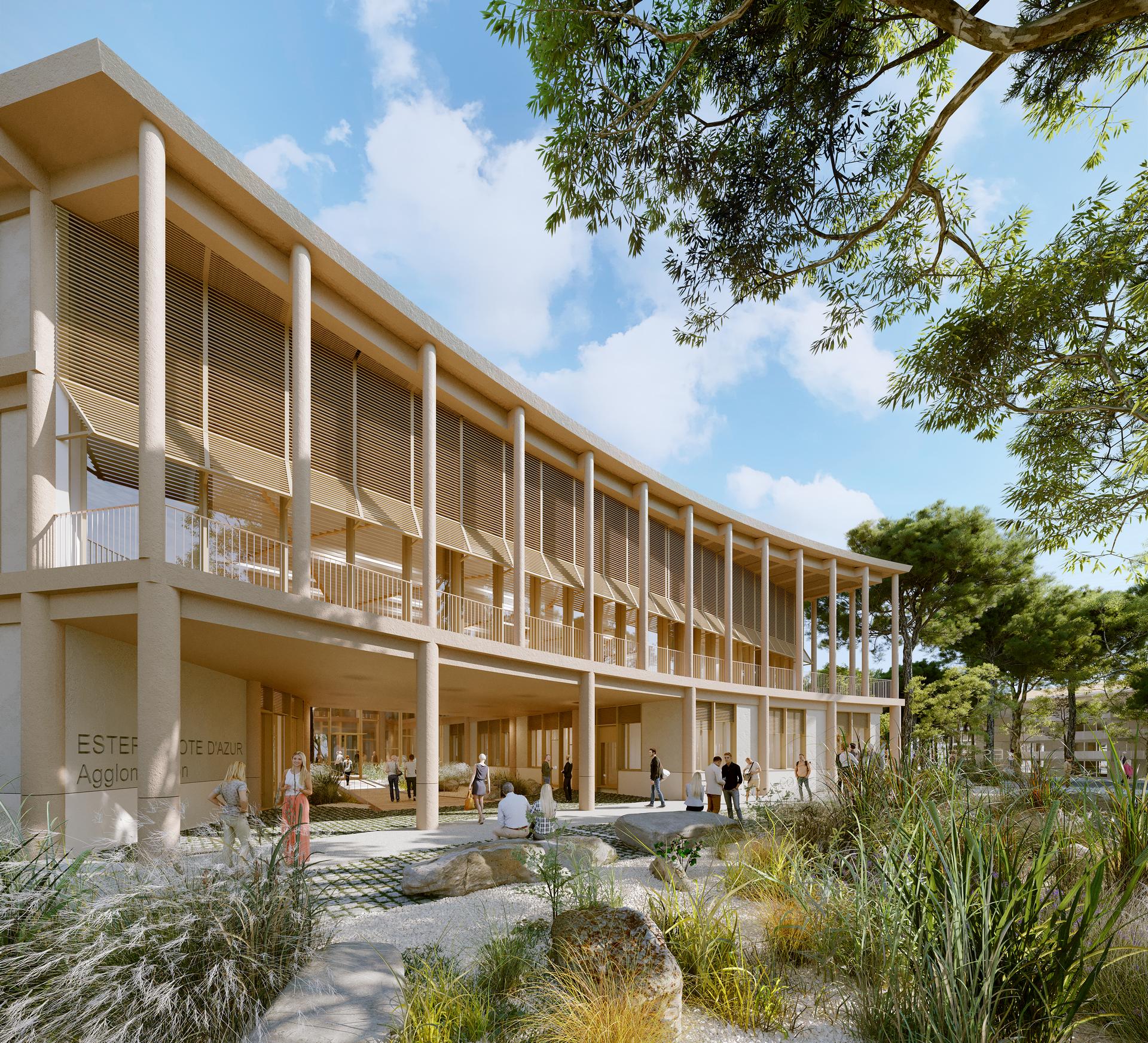
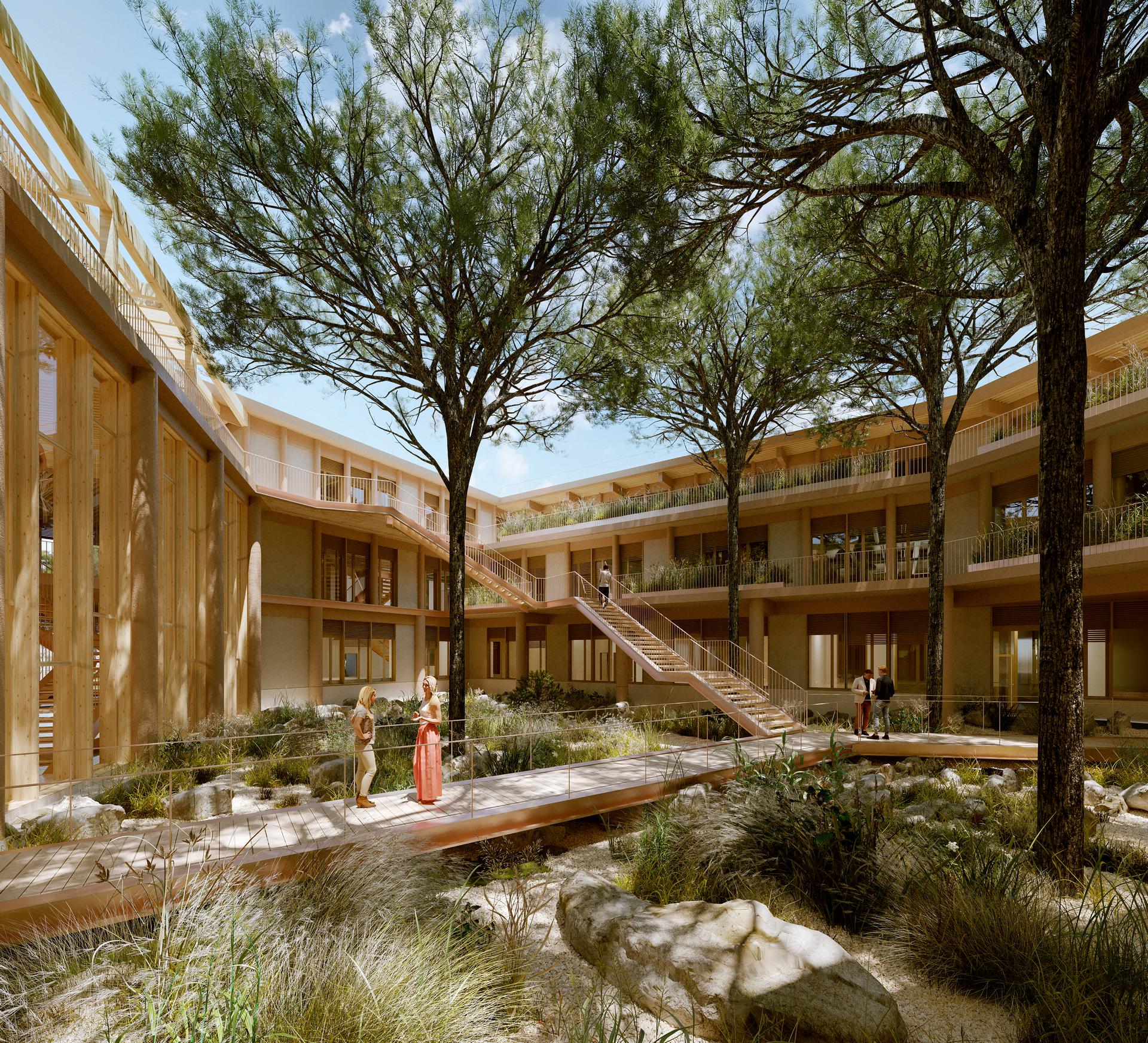
The project draws its architectural inspiration from its immediate environment. To the south, its facade curves in response to the presence of the sports arena, from which it borrows its peristyle. Its unifying roof references the surrounding residential fabric. Its materiality is rooted in its context, with colored concrete and natural earth coatings reminiscent of the colors of the nearby Esterel massif.
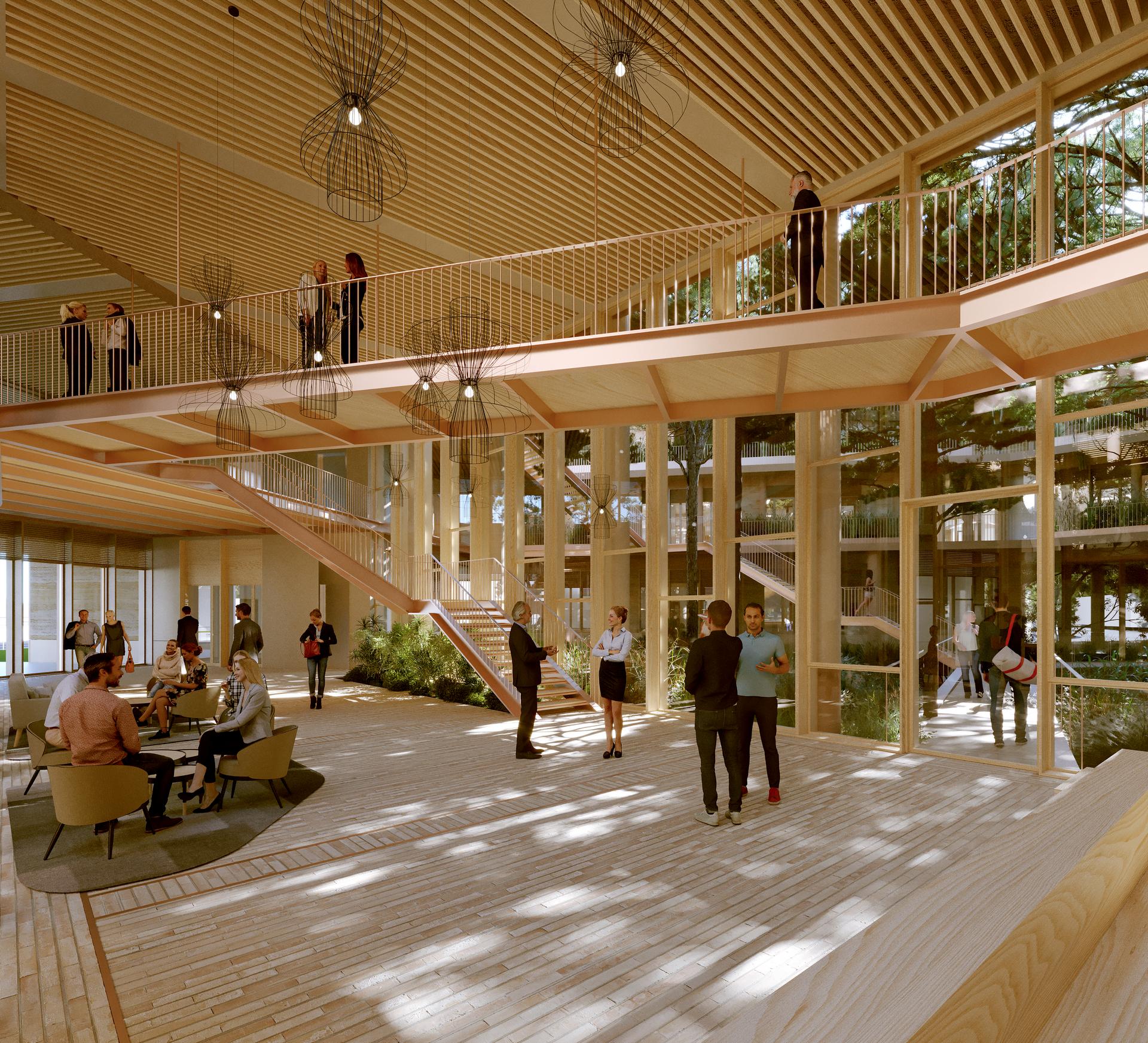
The access forecourt crosses the plot, connecting the site on all sides. Its main entrance, resolutely facing the city, offers a beautiful view of the entire building, placing it in the perspective of the wider landscape. To the north, the car park accessible from Avenue Theodore Rivière is largely wooded, in keeping with the abundant vegetation that lines the Pédégal.
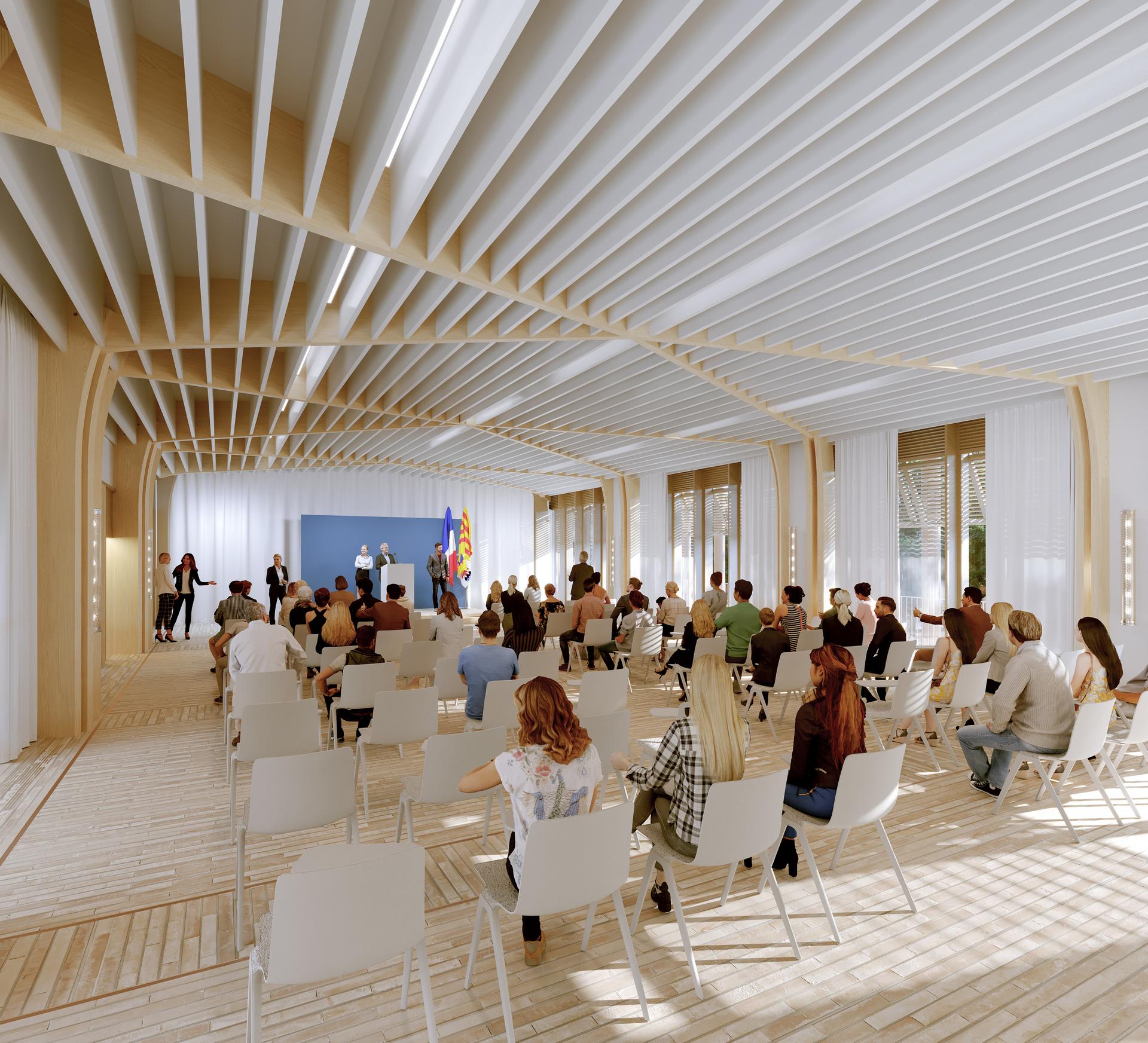
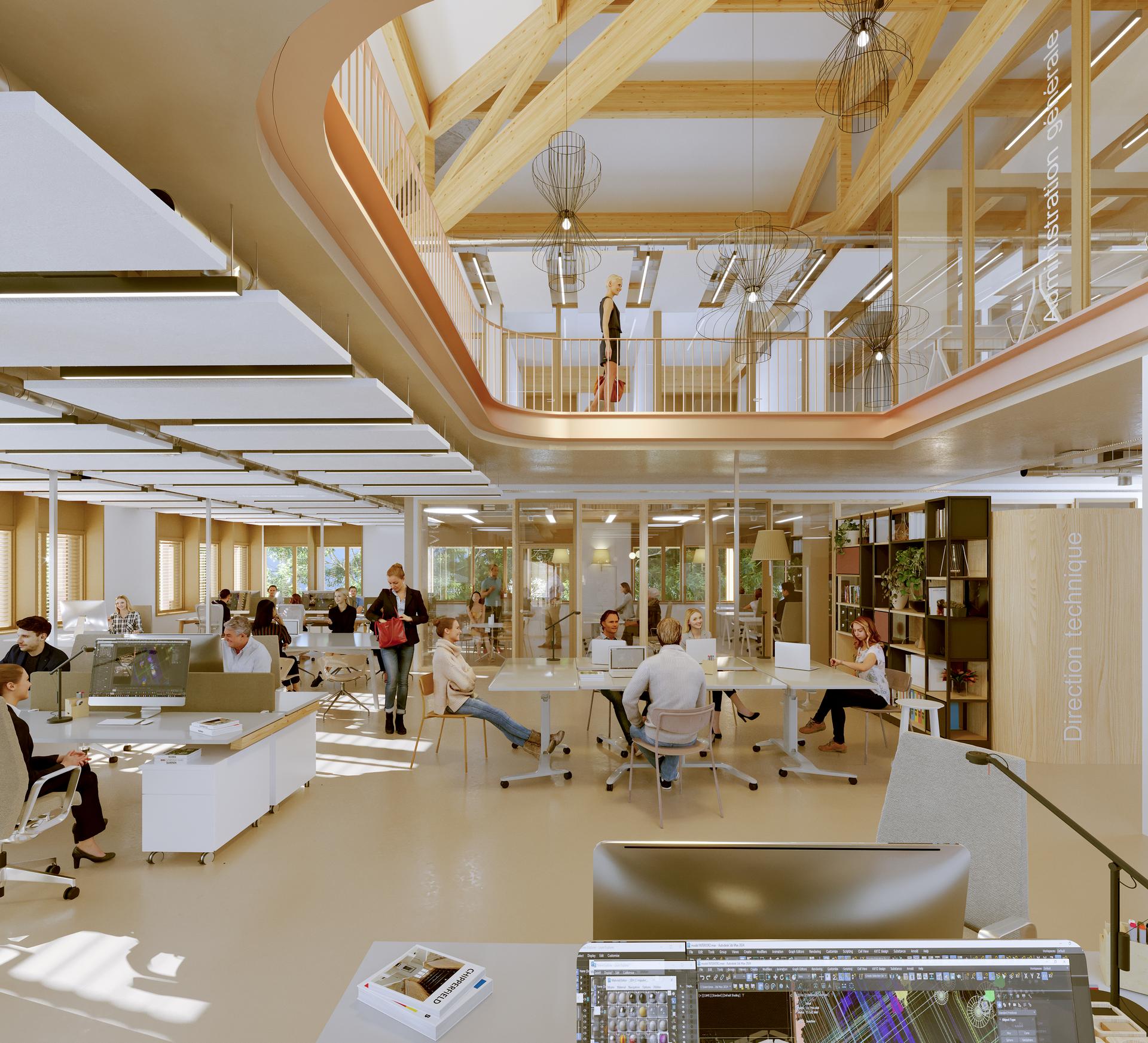
The entire park takes advantage of the topography to channel runoff from swale to swale down to the stormwater basin located to the south, thereby absorbing heavy rainfall. From the forecourt, the access sequence articulates the private and public spheres. Access to the community hall and various services for external users, a friendly and collaborative workspace for staff.
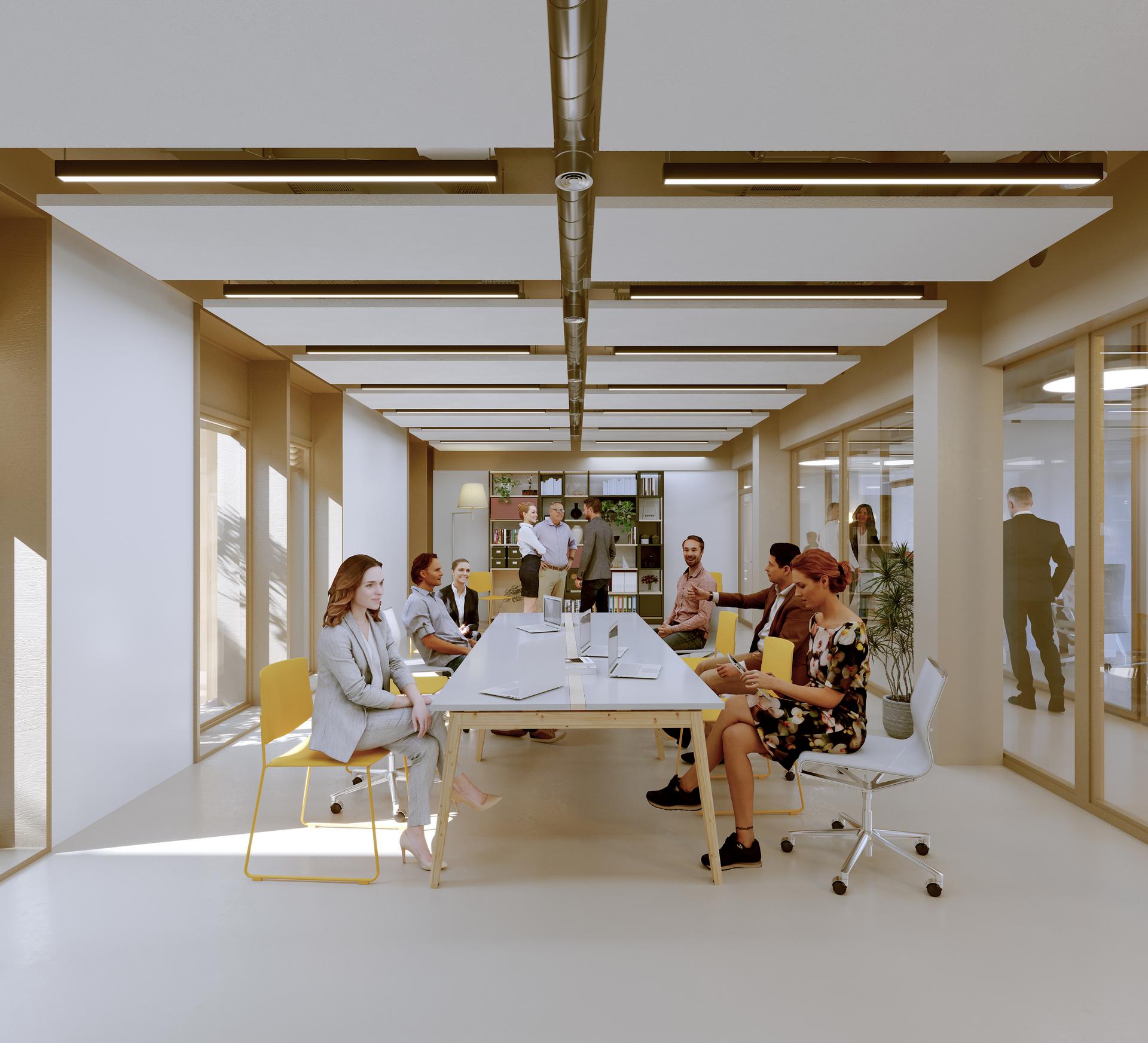
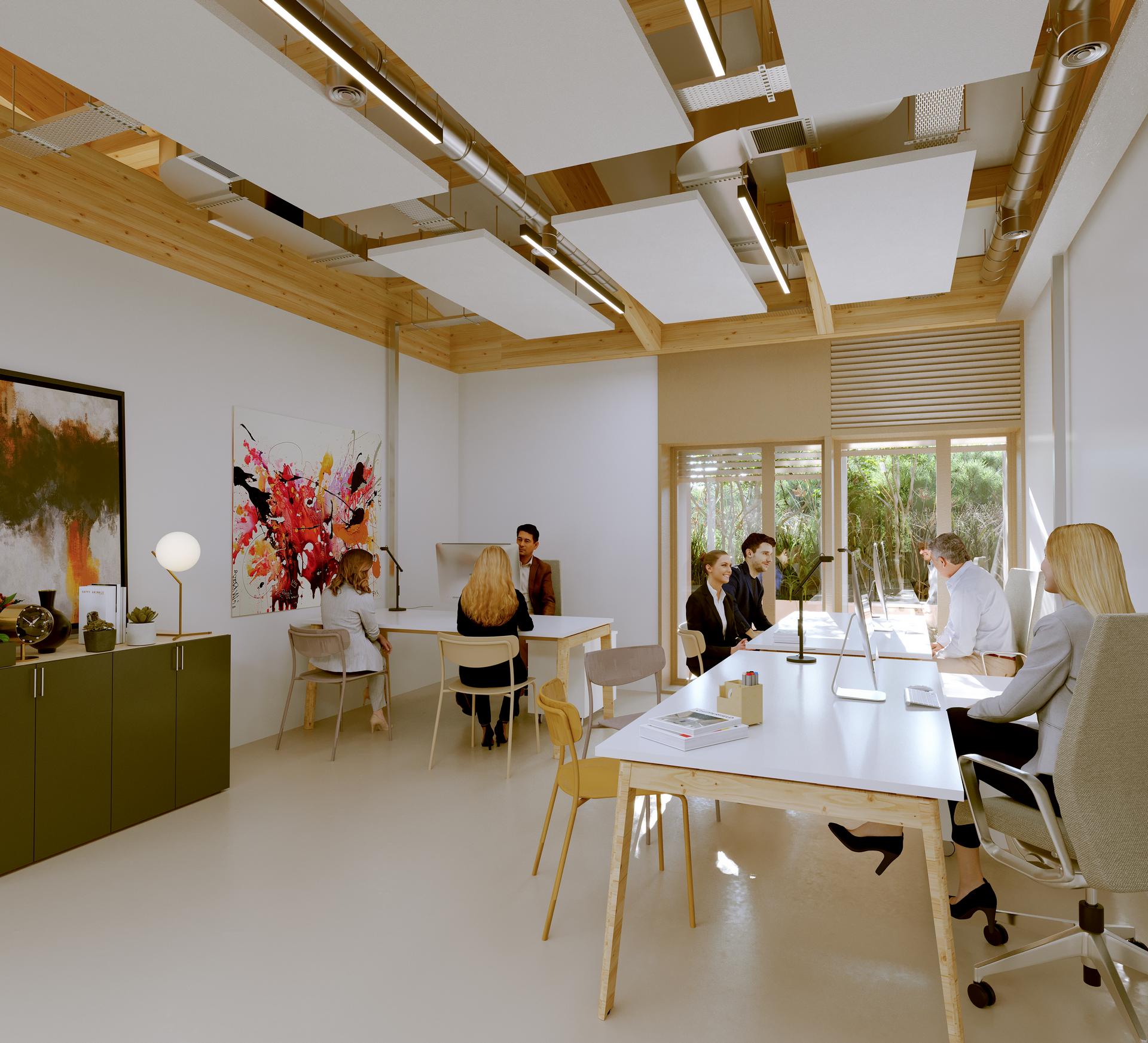
Bioclimatic architecture by nature, our proposal combines maximum functionality with simple and pragmatic climate comfort for users. The communal bastide is thus a shared house where workspaces are designed as collaborative spaces, blending interior and exterior, ventilation, and the search for thermal inertia through identifiable locations. The outdoor terraces are shaded, and the patio layout protects from the wind while allowing for good natural ventilation. The exposed facades are protected from the sun by walkways and roof overhangs.
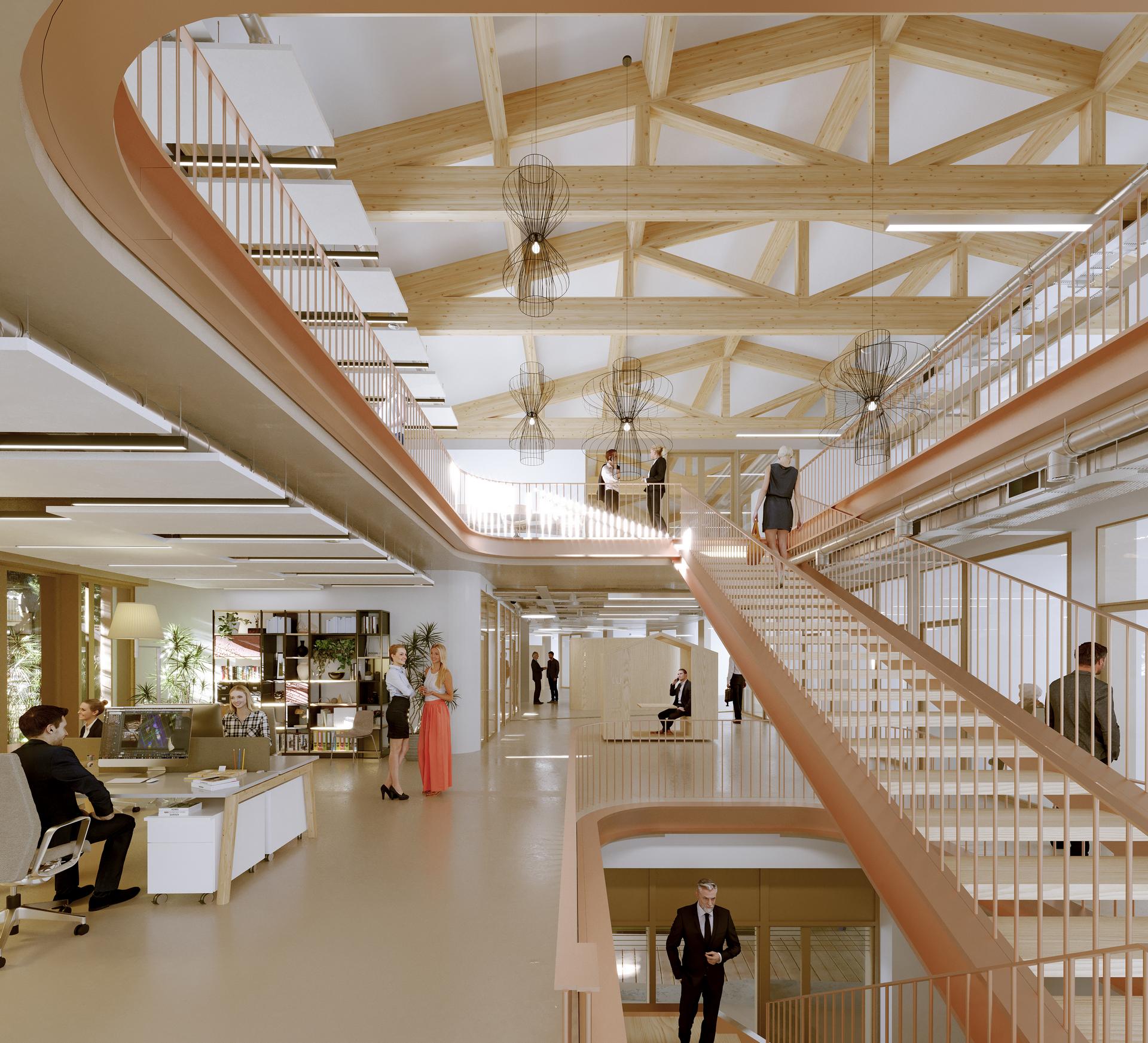
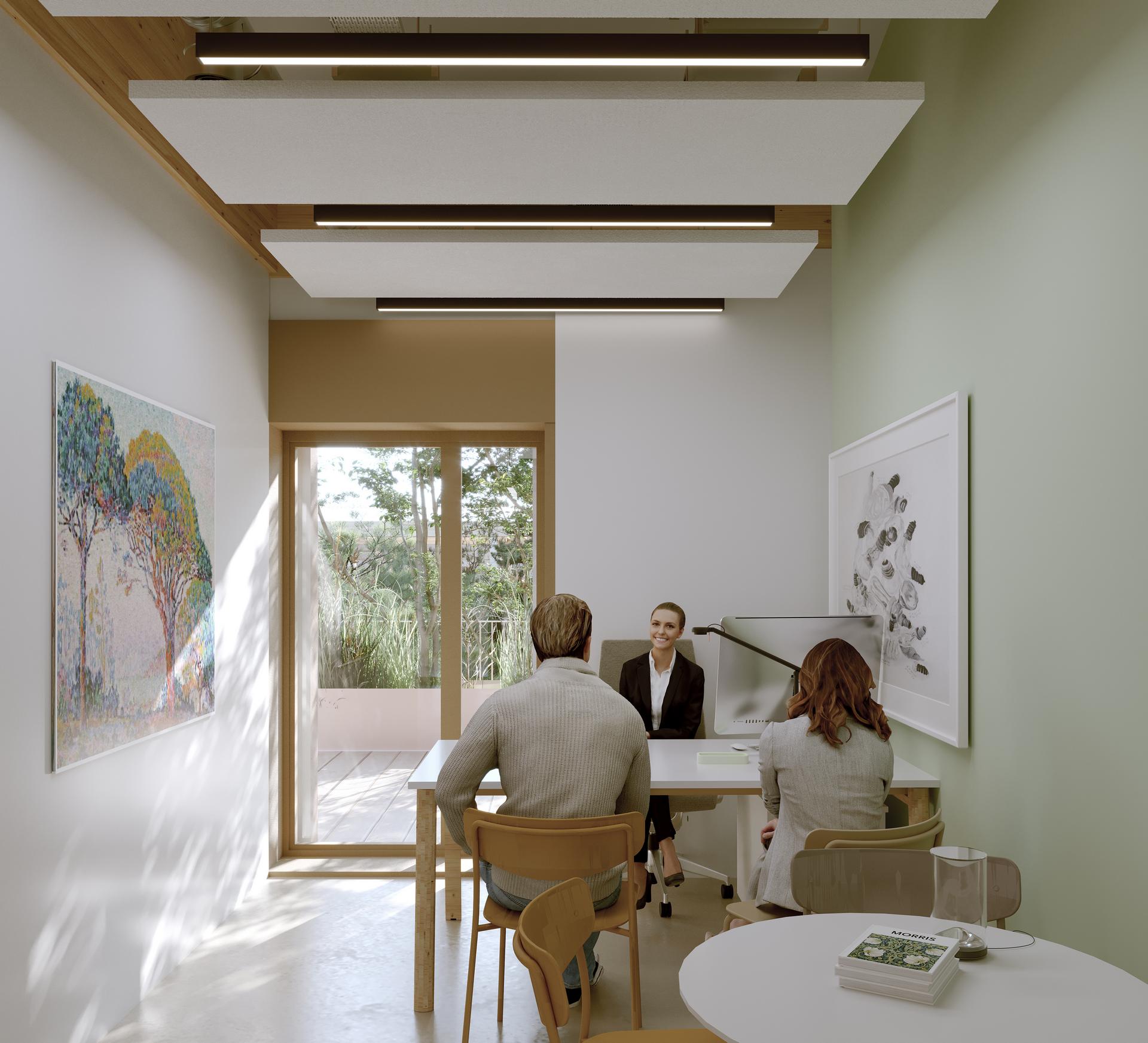
The project proposes to treat workspaces as living spaces in search of a form of domesticity, alternating between open space and closed offices. Here, there are no corridors, but large areas for interaction. Vertical circulation areas are naturally lit and visually connect the departments to each other through generous visual connections. Working together here means living in the same house, sharing the same space in the service of the public.
Images : IDAPLUS